

Technology companies do not just build products, they shape how entire markets think. Nowhere is that more evident than in artificial intelligence, where terminology has become a powerful tool for framing innovation. In earlier computing eras, the language was practical and restrained. Businesses bought servers, storage arrays, and networking equipment. The words reflected function, not imagination.
Today, the vocabulary has changed dramatically. AI is described in cinematic, almost industrial terms, AI factories, digital twins, agentic systems, and sovereign intelligence. Into this evolving lexicon, Nvidia has introduced another striking concept following its announcements at Nvidia GTC 2026: the rise of “clawbots.”
At first glance, the term might sound like branding flair. In reality, it signals a deeper shift in how AI systems are designed, deployed, and ultimately valued.
From Passive AI to Active Systems
To understand the significance of clawbots, it helps to look at the evolution of AI interfaces.
The first wave of generative AI brought tools that could respond to prompts with impressive fluency. Chatbots wrote emails, summarized documents, generated images, and answered complex questions. These systems were powerful, but fundamentally reactive. They waited for human input before doing anything.
Clawbots represent a move beyond that model.
Instead of responding, they act.
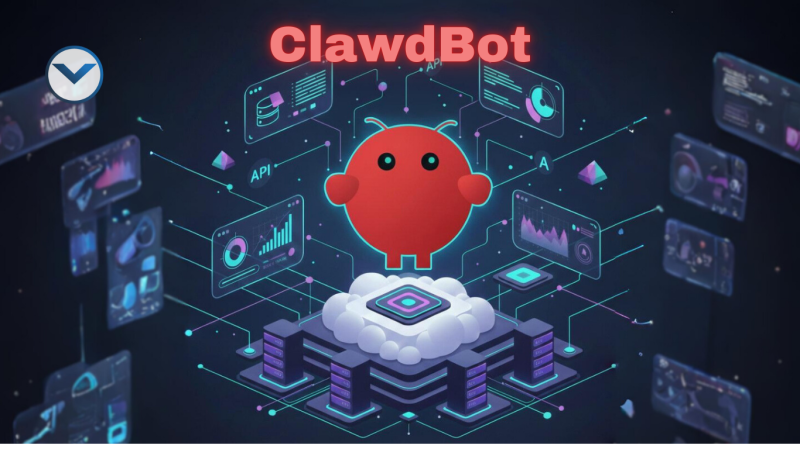
Built on frameworks like OpenClaw and extended through technologies such as NemoClaw, these systems are designed to operate continuously. They monitor conditions, retrieve data, interact with applications, call APIs, and execute multi step workflows with minimal supervision.
This shift from passive interaction to active execution is subtle in description but massive in implication. It transforms AI from a tool into something closer to a digital operator.
Why Language Matters in AI
The emergence of terms like “clawbot” is not accidental. Companies like Nvidia understand that naming a concept can help define its market category.
Under the leadership of Jensen Huang, Nvidia has consistently demonstrated an ability to translate complex technical ideas into memorable narratives. Phrases such as “AI factory” or “physical AI” do more than describe technology, they shape how businesses conceptualize its value.
“Clawbot” follows the same pattern.
The word suggests motion, autonomy, and capability. It implies that AI is no longer confined to analysis or generation but is now capable of taking initiative. In doing so, it reframes AI as a form of labor rather than merely an interface.
That distinction is critical. If AI is positioned as labor, then its value is measured not just in productivity gains but in its ability to replace or augment human work at scale.
What Clawbots Actually Do
In practical terms, a clawbot can be thought of as a highly proactive digital assistant.
Instead of simply summarizing your inbox, it could:
- Sort incoming messages by priority
- Draft and send replies
- Escalate urgent issues
- Schedule meetings and follow ups
In enterprise environments, the scope expands even further. A clawbot could monitor dashboards, generate reports, interact with enterprise applications, and coordinate workflows across multiple systems simultaneously.
Nvidia’s implementation emphasizes ease of deployment and scalability. With NemoClaw, organizations can install AI models and runtime environments quickly, integrating systems such as Nemotron models and OpenShell into a unified framework.
These agents are designed to run across a wide range of hardware, from RTX powered desktops to high performance systems like Nvidia DGX Station. This highlights a key strategic goal, making AI agents persistent workloads that operate continuously rather than intermittently.
The result is a system that blurs the line between software and employee.
The Infrastructure Behind the Vision
If clawbots succeed, they will not just change how software behaves, they will reshape the underlying infrastructure required to support it.
Always on AI agents demand:
- Continuous inference capabilities
- Large memory pools for context retention
- Orchestration across services and tools
- Secure access to enterprise data
- Reliable networking and compute resources
This plays directly into Nvidia’s strengths. The company’s portfolio spans GPUs, data center platforms, AI workstations, and software ecosystems designed to handle precisely these kinds of workloads.
By promoting clawbots, Nvidia is not just introducing a concept. It is expanding the demand for the infrastructure it already dominates.
A Growing Ecosystem
While Nvidia is leading the narrative, it is not alone in pursuing autonomous AI systems.
The company has highlighted integrations with major enterprise players such as Adobe, Atlassian, Salesforce, and ServiceNow. These partnerships suggest that clawbots are being positioned as part of a broader enterprise ecosystem rather than a standalone product.
Security is another critical layer. Autonomous agents capable of executing actions introduce new risks, which is why companies like Cisco, CrowdStrike, and Microsoft are part of the conversation around securing these systems.
At the same time, other major players are developing similar capabilities. Microsoft is embedding automation deeper into its Copilot ecosystem. Salesforce is advancing its agent strategy. Organizations such as OpenAI and Anthropic are also pushing toward systems that can reason, act, and coordinate tasks across tools.
The race is not about who invents autonomous agents, it is about who defines the platform they run on.
The Risks Behind the Hype
Despite the excitement, clawbots are still an emerging concept. The technology is early, and the risks are significant.
Unlike chatbots, which primarily generate responses, clawbots can take real actions within systems. That introduces new challenges:
- Errors can have operational consequences
- Misconfigured permissions can expose sensitive data
- Autonomous behavior can be difficult to predict or audit
Nvidia’s focus on privacy controls, isolated runtimes, and policy enforcement reflects an understanding that trust will be a major barrier to adoption.
There is also the risk of overpromising. Some implementations marketed as clawbots may turn out to be little more than traditional automation tools enhanced with language models. Others may struggle to deliver meaningful return on investment.
As with many emerging technologies, the gap between vision and reality remains wide.
A Glimpse of What Comes Next
Even with these uncertainties, the broader trend is clear. AI is moving beyond isolated interactions toward continuous, autonomous operation.
If chatbots represented the first phase of generative AI, clawbots may represent the beginning of its operational phase. They introduce the idea of AI systems that persist, adapt, and execute tasks as part of everyday workflows.
That shift has profound implications.
It suggests a future where software is not just something users interact with occasionally, but something that works continuously on their behalf. It also raises fundamental questions about accountability, security, and the role of human oversight in increasingly automated environments.
Nvidia’s framing of clawbots captures this transition in a way that is both accessible and strategic. Whether the term itself endures is less important than the idea it represents.
AI is no longer just answering questions. It is starting to do the work.
And if that vision holds, clawbots may be remembered not as a marketing buzzword, but as the moment the industry began to treat AI as a true participant in the workforce.