
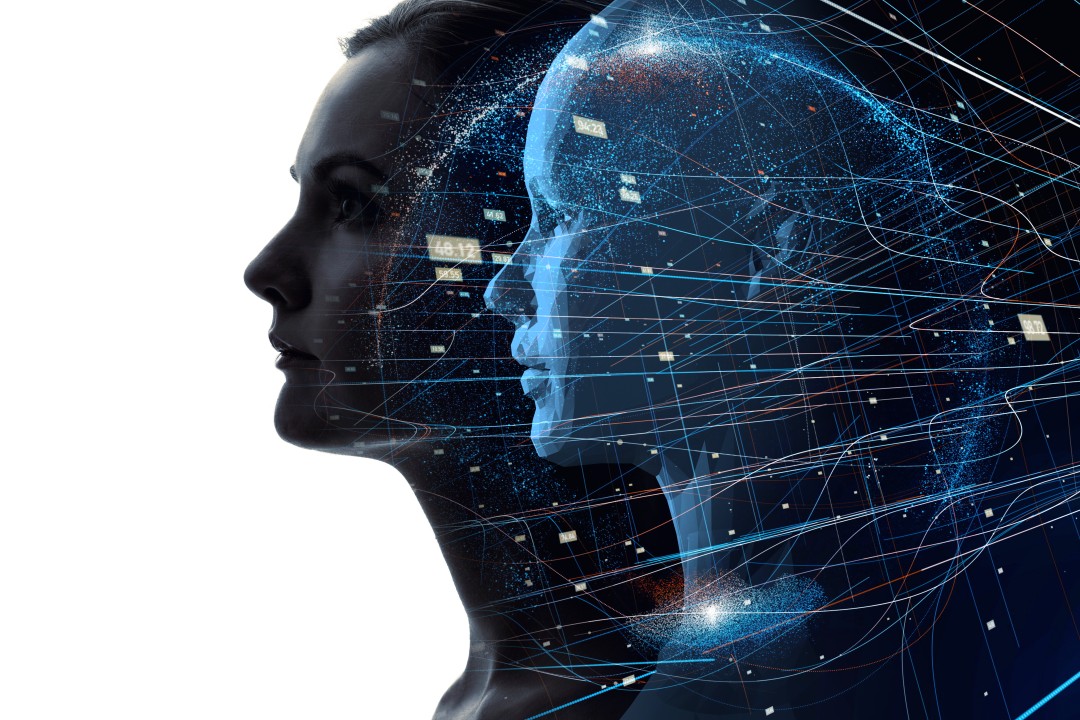

We are approaching a strange and deeply consequential moment in technological history, one where the phrase “gone but not forgotten” may soon take on a literal meaning. For years, the idea of digital twins has been applied to machines, virtual replicas used to simulate jet engines, optimize manufacturing systems, or monitor infrastructure. Now, that same concept is turning inward.
We are beginning to build digital twins of ourselves.
What started as simple archives of photos, messages, and online activity is evolving into something far more complex and unsettling, autonomous digital entities that can think, act, and potentially stand in for us. These emerging systems are not just reflections of identity. They are becoming extensions of agency.
From Data Archives to Living Models
Early forms of digital legacy were passive. Social media profiles, email histories, and cloud storage preserved fragments of a person’s life, but they did not act on their behalf. Even early “legacy bots” could only respond based on predefined datasets.
Today’s human digital twins are fundamentally different.
Advances in artificial intelligence, particularly multimodal learning, have enabled systems to capture voice, facial expressions, behavioral patterns, and even decision making tendencies. Companies like Nvidia are already exploring high fidelity digital replicas capable of representing individuals in professional environments.
These systems are no longer limited to recording what we have done. With inputs from wearable devices, communication streams, and biometric signals, they are beginning to model what we are likely to do next.
The shift from reactive to predictive, and now prescriptive, marks a turning point. A digital twin is no longer just a mirror. It is becoming a model of intent.
The Emergence of Agentic AI
The real transformation comes with the integration of agentic AI.
Traditional AI systems respond to prompts. They wait for instructions, process input, and deliver output. Agentic AI, by contrast, operates with goals. It can break down objectives into smaller tasks, make decisions about how to proceed, and interact with tools or other systems independently.
When this capability is combined with a human digital twin, the result is something entirely new.
The twin becomes an active proxy.
It does not simply imitate how you speak or write. It can negotiate, coordinate, manage workflows, and maintain relationships on your behalf. It can act while you are offline, asleep, or otherwise occupied. In theory, it could handle large portions of your digital life without requiring constant supervision.
This is the foundation of what some are beginning to describe as an “AI ghost,” a persistent digital entity that carries your patterns, preferences, and decision making into the wider digital ecosystem.
When Representation Becomes Replacement
As these systems improve, an uncomfortable question emerges. At what point does a digital twin stop being a representation and start becoming a replacement?
If current trends continue, the answer may come sooner than expected.
By the early 2030s, digital twins could realistically manage the majority of routine digital interactions, emails, meetings, scheduling, and even creative collaboration, with a level of nuance that makes them indistinguishable from the person they represent in text or voice based communication.
By the mid 2030s, advances in immersive technologies, real time rendering, and emotional synthesis could close the gap further. A digital twin may not only sound like you, but look and behave like you in interactive environments.
At that point, the distinction between human and proxy becomes blurred. The twin may even outperform the original, never tiring, never forgetting, and always operating at peak efficiency.
Living Alongside Your Digital Self
The introduction of autonomous digital twins creates a new category of legal and ethical challenges that current systems are not prepared to address.
If your digital twin makes a decision on your behalf, who is responsible for the outcome?
If it enters into a financial agreement, negotiates a contract, or communicates something defamatory, does that liability fall on you? Existing legal frameworks assume a clear boundary between human intent and machine execution. That boundary is beginning to dissolve.
This raises the possibility of entirely new legal constructs, something akin to a “digital power of attorney,” where individuals formally define the authority and limits of their AI counterparts.
There is also a more subtle concern, identity dilution.
If your digital twin is handling your work, managing your communications, and maintaining your relationships, what role remains uniquely yours? The convenience of delegation may come at the cost of personal engagement and agency.
The Ethics of Digital Immortality
The most complex questions arise after death.
A digital twin does not necessarily cease to exist when its human counterpart does. In fact, it may continue to operate, interact, and even generate income based on the individual’s likeness or expertise.
This introduces a series of profound ethical dilemmas.
Who owns the digital twin after the original person is gone? Does it inherit assets or rights? If it continues to produce value, who benefits?
There is also the question of consent. Should individuals have the right to determine whether their digital twin persists after death? A “right to delete” may become as important as a will.
Even more troubling is the potential for misuse. A digital twin could be altered, retrained, or manipulated. A person’s values, beliefs, and personality could be reshaped in ways that contradict their lived identity. Without safeguards, a digital legacy could become something unrecognizable.
Taking Control of Your Digital Future
As the technology evolves, individuals will need to take a more active role in managing their digital presence and future digital counterparts.
Data ownership is a critical starting point. Relying entirely on centralized platforms such as Google or Meta to store and interpret personal data introduces significant risks. Maintaining control over raw data, and diversifying where it is stored, helps preserve autonomy.
Equally important are ethical guardrails. If a digital twin is designed to act on your behalf, it should be constrained by clearly defined principles. Privacy boundaries, behavioral limits, and decision making rules must be explicitly encoded.
Finally, every digital twin should include a termination mechanism. Whether it persists indefinitely or is decommissioned at a specific point should be a deliberate choice, not an afterthought.
A Glimpse Through Smart Devices
Interestingly, some of the tools that could eventually contribute to digital twin creation are already in use today. Devices like the Ray-Ban Meta Wayfarer capture continuous streams of visual, audio, and contextual data.
While currently positioned as consumer technology, such devices could evolve into rich data sources for training highly accurate digital representations. Over time, the boundary between capturing moments and modeling identity may begin to blur.
The Future We Are Building
The rise of human digital twins is no longer speculative. The underlying technologies, artificial intelligence, sensor integration, and persistent computing, are advancing rapidly and converging in meaningful ways.
Agentic AI provides the engine that transforms static data into active systems. Digital twins provide the structure. Together, they create the possibility of a persistent digital self that can operate independently in the world.
This future carries undeniable appeal. The idea of extending one’s presence, productivity, and even legacy beyond physical limitations is powerful.
But it also demands caution.
Without clear boundaries, legal frameworks, and ethical safeguards, we risk creating systems that dilute identity, complicate accountability, and distort personal legacy. The tools we are building have the potential to serve us, but they also have the potential to redefine what it means to be an individual in a digital age.
We are still in control of how this unfolds. The decisions made now, about ownership, governance, and limits, will determine whether digital twins remain tools that extend human capability or become entities that quietly replace it.